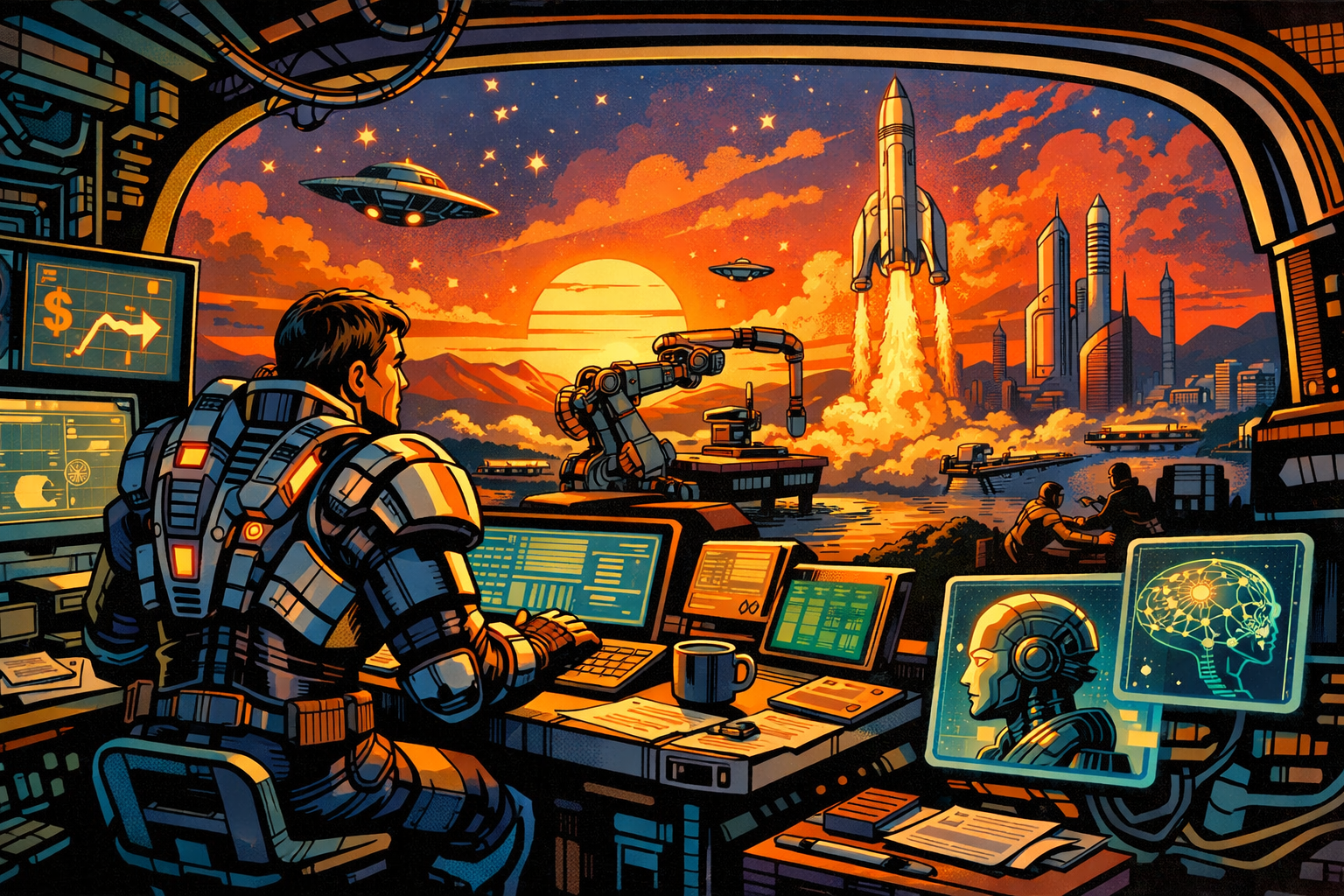
The AI revolution feels like the dot-com boom, and this time I’m ready for it.
I got on the internet in the mid-nineties. I watched people struggle with the concept of email, and a few years later it was ubiquitous. By the time the boom peaked in the late nineties I was finishing high school and starting university, a long way from Silicon Valley. By the time I had the skills and the position to act, the bubble had burst.
That was over twenty years ago. Since then I’ve spent nearly a decade working for companies and thirteen years running my own business. I’m a different person now. I know how to build things, how to ship them, and how to spot an opportunity.
AI is that opportunity.
What was wrong with the last run
My business was successful by most measures. Good money. Plenty of work. But the revenue was tied to my time. Every dollar came from hours I put in. As the business grew, I spent less time building and more time managing people. I wasn’t creating enterprise value — I was creating a well-paying job for myself.
That’s the ceiling for a solo operator without leverage. You either stay small or you become a manager. There’s no third option.
AI is the third option.
What’s different now
A Claude subscription costs less than a month of office rent. For that, I get a force multiplier across everything that used to require hiring people. Development, obviously — AI can multiply my output many times over. But also design, marketing, research. It fills the gaps to a good-enough level that I can lean on it heavily and keep moving.
The return on investment is off the charts. Compare it to what it costs to set up a physical shop or run an office. The barrier to building something real as a solo dev has never been lower.
I’m building products alongside a full-time role. Late nights and early mornings. Drawing inspiration from friends and from anonymous builders on X and Reddit who are doing the same thing. It feels like wearing a mech suit.
The plan
No grand vision. No moonshot. Just a steady progression:
First, proof of income. Something that earns a dollar without me trading an hour for it. Then complementary income — enough to matter alongside a salary. Then supplementary. Then, eventually, a retirement income.
That’s the game. I missed the last wave. I’m not missing this one.